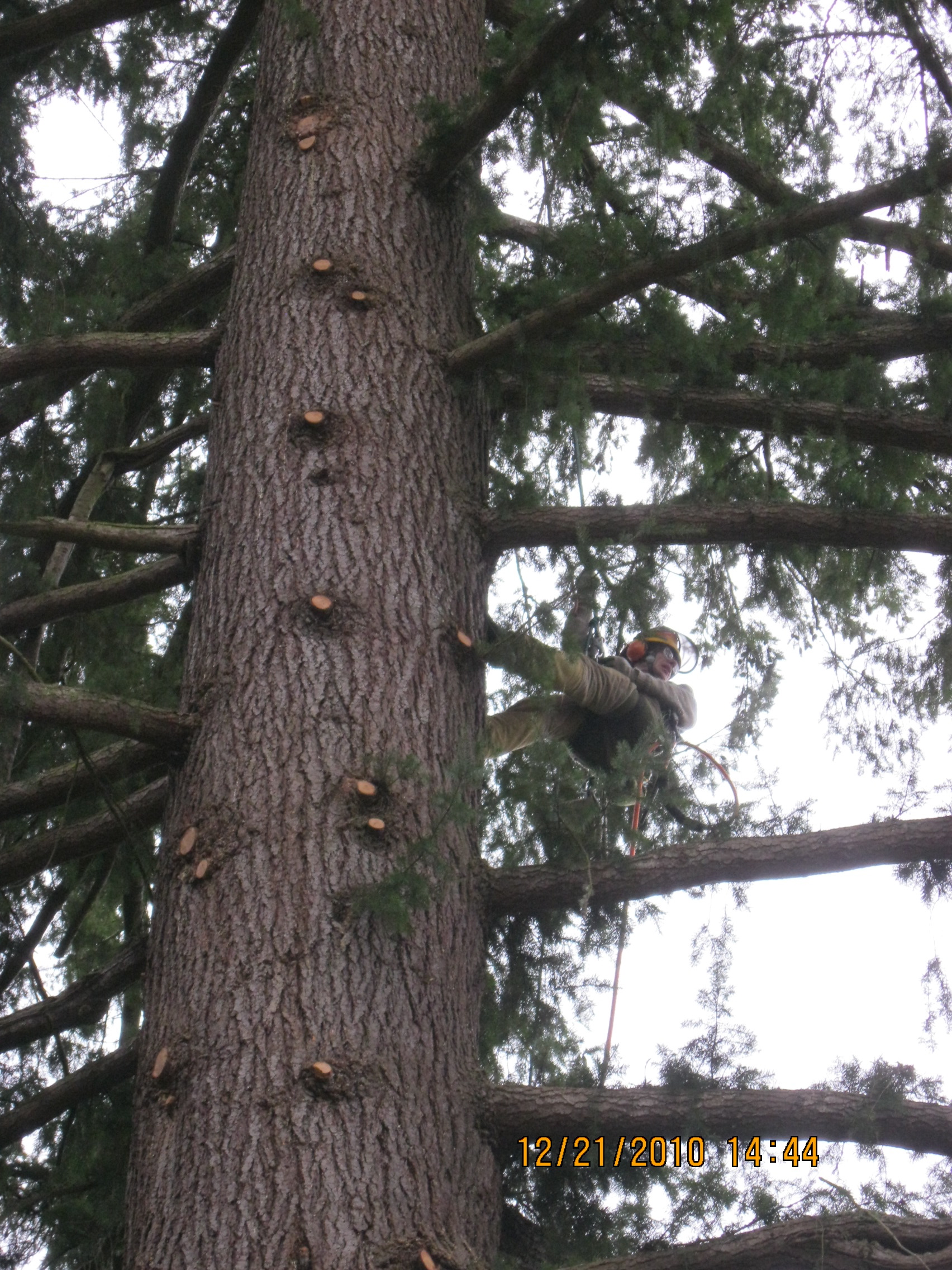
Right-angled branches
The central trunk of a conifer allows for strong branch attachments. Wind and rain usually snap a conifer limb without damaging bark on the trunk but snow and ice can pull a very strong limb out completely causing tearing of surrounding trunk wood and bark.
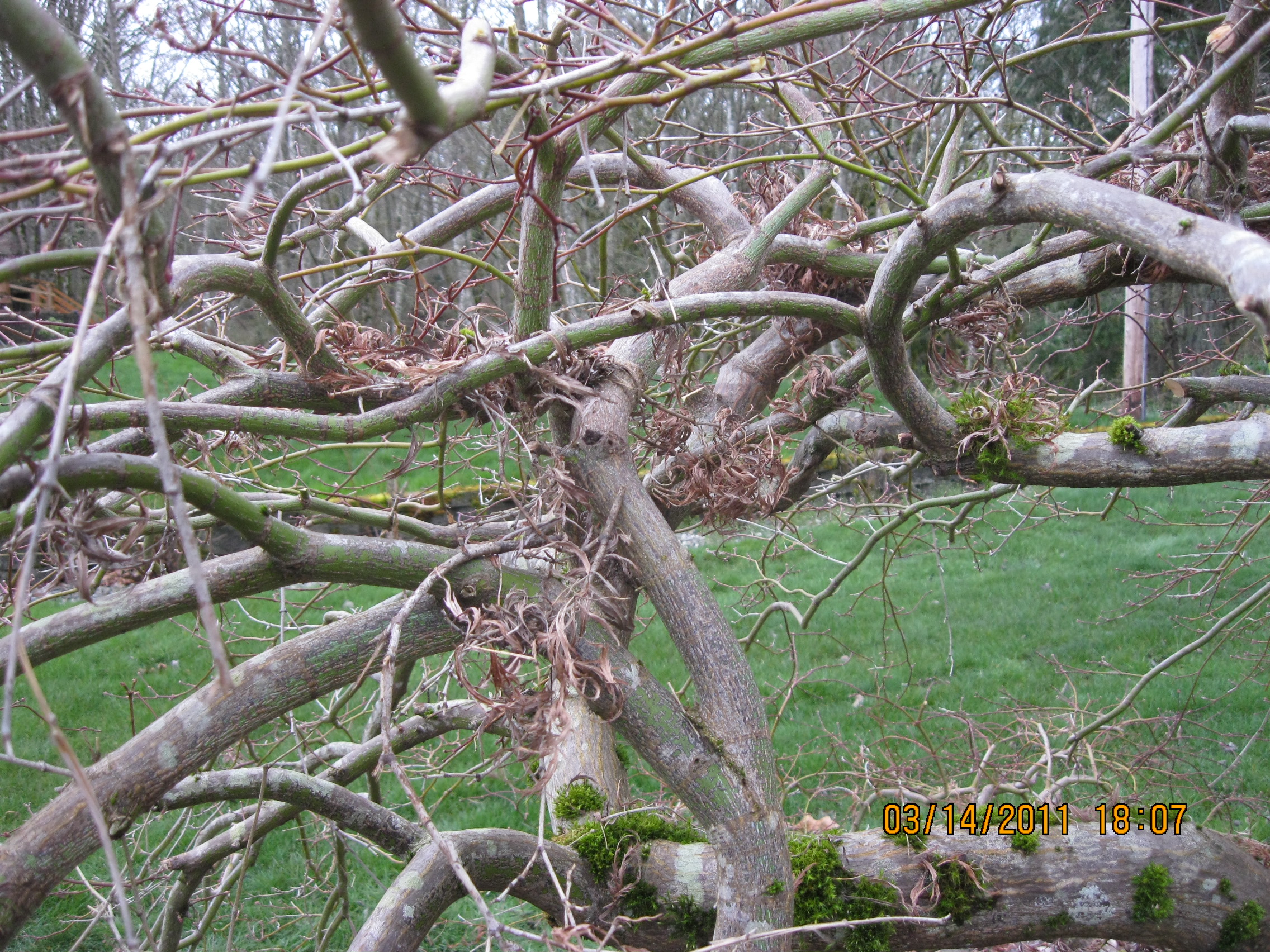
U and V-shaped branches
Weeping Japanese Maple with U and V shaped unions also displaying co-dominant situations. A U shape is stronger than a V. If the branches or trunks are similar in diameter the union will be weaker than one being larger. V’s are more prone to developing and or containing included bark which makes a weak attachment and can develop decay leading to branch failure.
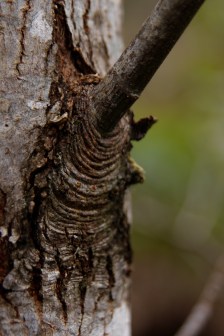
U-shaped branch attachment
Branch showing solid attachment (union) to trunk and swelling of trunk as it makes room for branch. No bark of trunk or branch included in union.
 DANA HOAGLUND